Three Ambassadors in Four Days: Poland's Diplomatic Revolt Over Court Seizure
November 4, 2026 · Frisian News
Photo: Wikimedia Commons
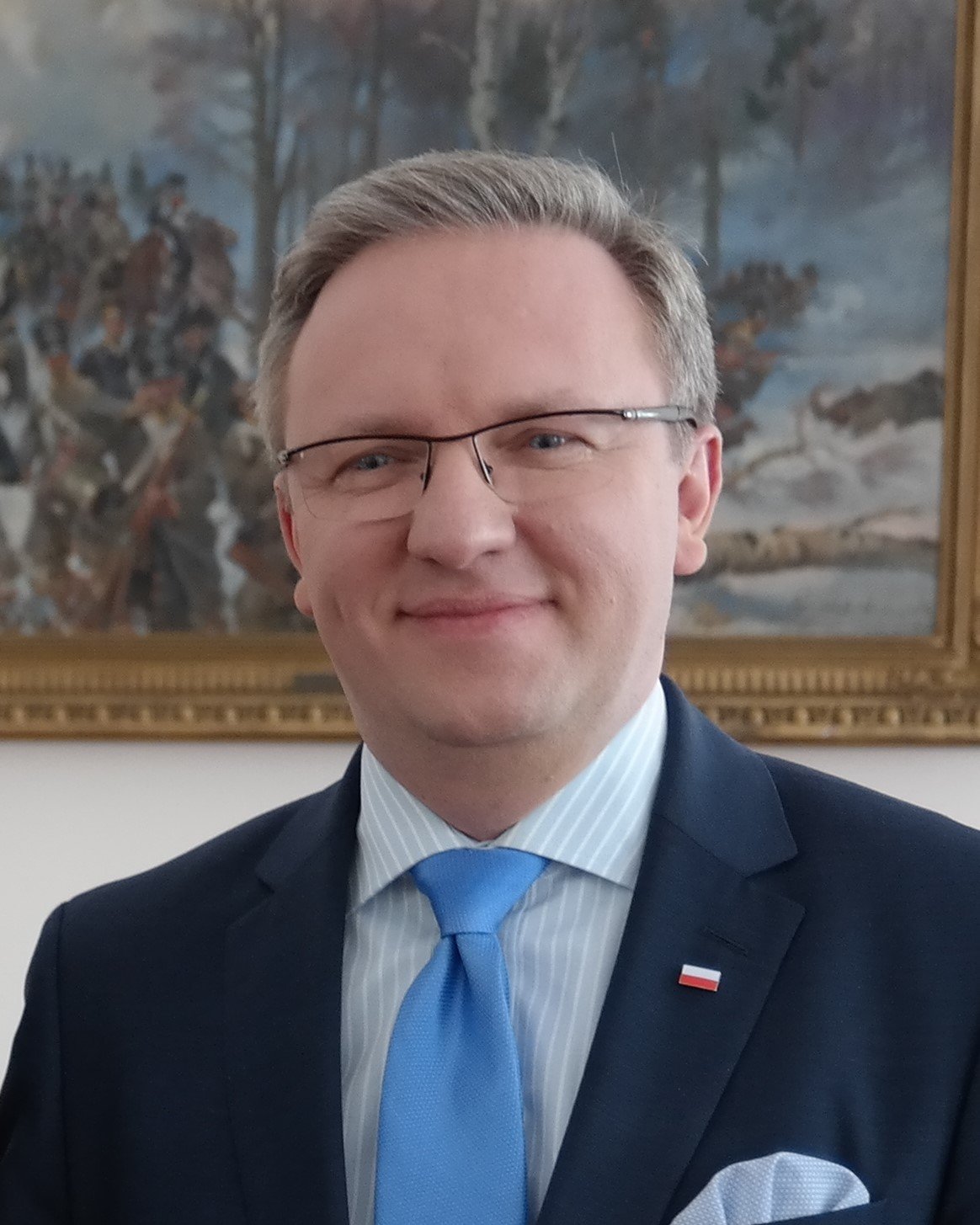
Three senior Polish ambassadors resigned in four days after riot police handed control of the Constitutional Tribunal to government-backed judges. UN envoy Krzysztof Szczerski became the third to go, following the envoys to China and Romania.
Three Polish ambassadors quit in four days. That is the precise count of senior diplomatic dissent that Donald Tusk's government has generated since riot police seized the Constitutional Tribunal on the evening of October 30, according to Brussels Signal.
The sequence ran as follows. Jakub Kumoch, Poland's envoy to China, resigned on October 30. Paweł Soloch, ambassador to Romania, followed on October 31. On November 2, foreign ministry spokesman Maciej Wewiór announced that foreign minister Radosław Sikorski had accepted Krzysztof Szczerski's request to cut short his mission as Poland's permanent representative to the United Nations. Szczerski will leave New York before the end of the month, Wewiór said.
Kumoch and Soloch stated their reasons plainly. Soloch said the unlawful attempt to take over the court left him unable to keep serving. Kumoch called it a matter of conscience and told President Karol Nawrocki he had been instructed to deliver a diplomatic note that, in his view, misrepresented events in Warsaw. Szczerski has not publicly explained his decision.
The trigger was a single evening's operation. Justice minister and prosecutor general Waldemar Żurek asked riot police to seal off the tribunal building. Judges elected by the ruling parliamentary majority then entered while chief justice Bogdan Święczkowski was kept outside. One of them, Anna Korwin-Piotrowska, whose appointment Nawrocki had refused to swear in, declared Święczkowski and his deputy suspended for one month and took control of the court. Święczkowski and First President of the Supreme Court Zbigniew Kapiński called it a coup d'état, Brussels Signal reported. Nawrocki turned his plane back mid-flight to Senegal and described a forcible takeover of a constitutional organ of the state.
The critics of the operation are not confined to the opposition. Law professor Marcin Matczak, described by Brussels Signal as a former Tusk ally, said there was no legal basis for suspending Święczkowski. Tusk ruled out any compromise and said the move was necessary to restore the rule of law.
Brussels backed Warsaw within hours. A European Commission spokesperson said the election of the eight judges "lies within the constitutional power of the Sejm," the lower house of parliament. Brussels Signal reports that the Commission had previously frozen billions in EU funds over earlier judicial reforms, and that in February 2024, weeks after Tusk returned to power, Commission President Ursula von der Leyen released up to €137 billion. Washington read the situation differently. US ambassador to Poland Tom Rose called the events "very serious indeed."
Sikorski dismissed the resignations on the social-media platform X, comparing the three unfavorably to ambassadors of communist Poland who quit in protest at the 1981 martial law declaration. Kumoch rejected the premise directly: he had not consulted Nawrocki before deciding to leave, interia.pl reported. Presidential minister Marcin Przydacz, quoted by niezalezna.pl, described the three as senior diplomats who "refuse to put their name to the lawlessness of the Tusk government." Przydacz also called Sikorski's insinuation of presidential pressure a lie, interia.pl reported.
Three resignations in four days is not a fringe reaction. It is a measurable one.

Published November 4, 2026 · Frisian News