81 to 51: Italy's Senate Reopens the Nuclear Door 38 Years After Voters Shut It
September 27, 2026 · Frisian News
Photo: Wikimedia Commons
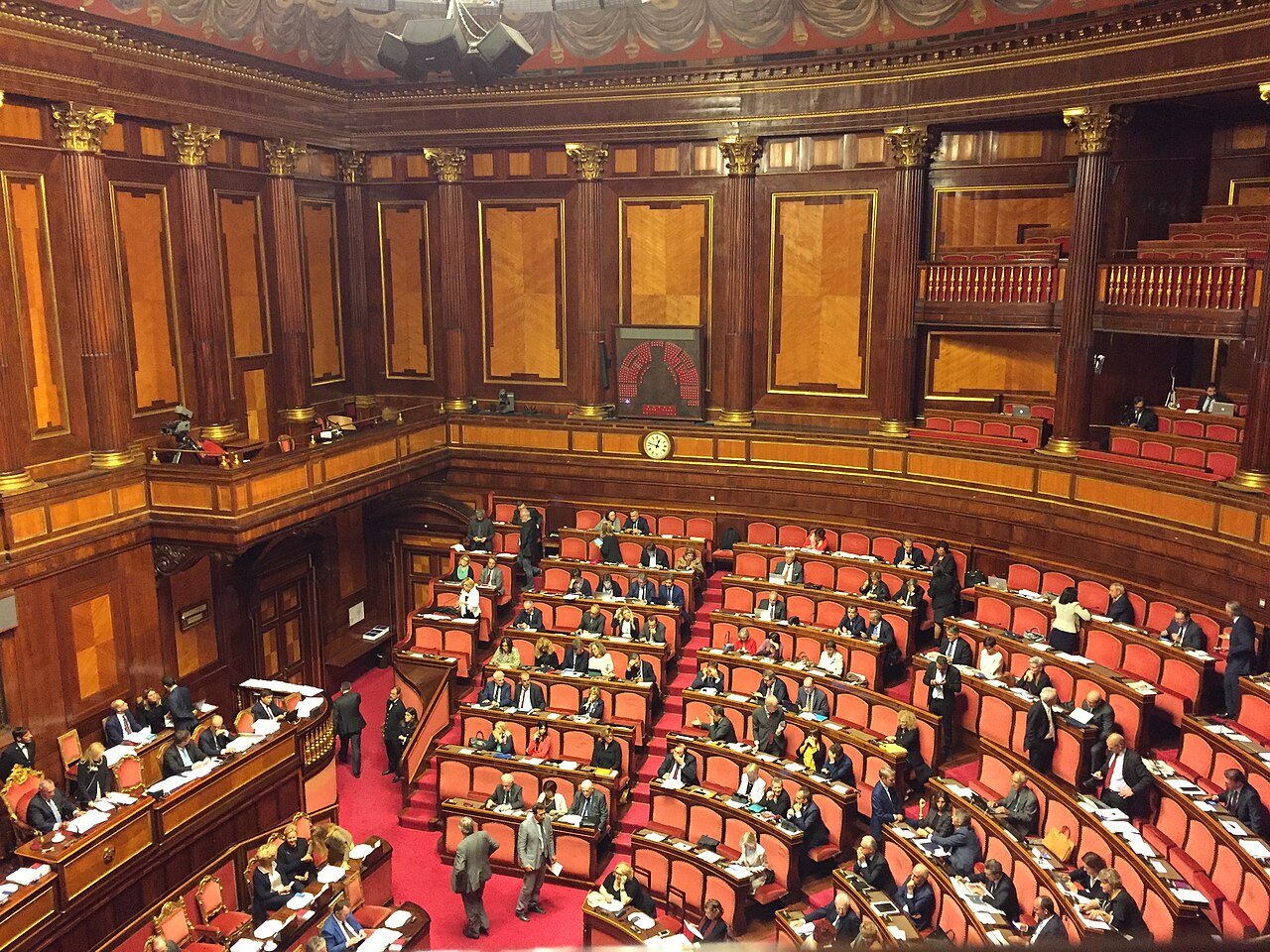
Italy's Senate passed a nuclear enabling law by 81 votes to 51 on September 23, thirty-eight years after a 1987 referendum rejected atomic power. The law gives the government 12 months to draft licensing decrees; no reactor has been authorised and the first plant is not expected before the mid-2030s.
Eighty-one senators voted in favour on September 23, almost 40 years after Italian voters rejected nuclear power in a 1987 referendum triggered by Chernobyl. The Senate passed the enabling law by 81 votes to 51 with seven abstentions, completing a bill that had already cleared the Chamber of Deputies on June 4 by 155 votes to 86.
The law authorises no reactor. It gives the government 12 months to issue decrees on licensing, safety, spent fuel, radioactive waste and site selection, with a further 24 months for corrections, Brussels Signal reports. Environment and energy security minister Gilberto Pichetto Fratin, who sponsored the bill, said the first reactor could be running by 2033 or 2034. Italy's national energy and climate plan foresees between 8 gigawatts and 16 gigawatts of nuclear capacity by 2050, covering 11 to 22 per cent of electricity demand, Brussels Signal adds.
Prime Minister Giorgia Meloni called the vote "a brave and common-sense choice." Pichetto Fratin told the Senate that Italy cannot "stand idly by" while other countries develop nuclear capacity, citing energy market volatility and geopolitical tensions, World Nuclear News reports. The government frames the law as a response to rising electricity demand from data centres and industrial electrification, and points to energy shocks from the Ukraine War and the conflict involving Iran, according to Brussels Signal.
The gap between that argument and Italy's actual record spans almost four decades. After closing its last two plants, Caorso and Trino Vercellese, in 1990 following the 1987 vote, a second referendum in 2011 buried revival again: World Nuclear News reports that 94 per cent of voters then rejected any new reactor construction. Italy has spent the decades since importing electricity generated by nuclear plants across its borders, Greek City Times notes. It still lacks a permanent national repository for waste from its old programme, and no region has yet volunteered to host a new facility, Italy Telegraph reports.
The cost picture offers little comfort to the official line. Academic estimates cited by Italy Telegraph place small modular reactor construction costs at between 4,000 and 6,000 euros per kilowatt, against a competitive threshold for Italy of 2,200 euros per kilowatt. Only three SMRs are operational worldwide, one in China and two in Russia, and none has demonstrated the promised cost advantages over traditional reactors, that outlet notes. France's Flamanville conventional reactor ballooned from 3.3 billion euros to 19.1 billion euros, Italy Telegraph adds, while industry estimates put a single 300-megawatt SMR at between 3 billion and 6 billion euros, Brussels Signal reports. The Italian government has committed 67.5 million euros from the Infrastructure Investment and Development Fund for 2027 to 2029 and earmarked 135 million euros for nuclear research and development, with 200 million euros already invested in the startup Newcleo, Italy Telegraph reports.
Italy also lacks domestic uranium reserves, which complicates the energy independence argument, Italy Telegraph notes. The global uranium supply chain is dominated by Russia, Kazakhstan and Canada. Michele Governatori, a senior adviser at climate think tank ECCO, told Brussels Signal that the framework would "make clear the limited interest of private investors" in technologies that are not yet competitive or commercially ready.
The vote does align Italy with a broader European shift. France's 2026 to 2035 energy plan envisions six new EPR2 reactors and extensions for all 57 existing units, according to Italy Telegraph. Sweden has abandoned its 100 per cent renewable target in favour of a fossil-free grid and has greenlighted two conventional reactors by 2035. On the day of the Senate vote, French SMR developer Nuward and its parent EDF, alongside Edison and Italian partners Ansaldo and Maire, confirmed a shared ambition to deploy a first SMR in Italy by 2035, World Nuclear News reports.
Almost four decades of prohibition bought Italy exactly zero energy independence. The first electrons from a new Italian reactor are still a decade away.
 Frysk
FryskIenentachtich senators stimden op 23 septimber foar, hast 40 jier neidat Italiaanske kiezers kearnenergie fersmiten yn in referindum yn 1987 dat troch Tsjernobyl útlokke waard. De Senaat naam de machtigingswet oan mei 81 tsjin 51, mei sân ûnthâldingen, en foltôge dêrmei in wetsfoarstel dat de Keamer fan Ôffurdigen al op 4 juny mei 155 tsjin 86 goedkart hie.
De wet autorisearret gjin reaktor. It jout de regearing 12 moannen om dekreten út te jaan oer fergunning, feilichheid, brûkte brânstof, radioaktyf ôffal en de seleksje fan lokaasjes, mei in fierdere 24 moannen foar korreksjes, meldt Brussels Signal. Miljeu- en enerzjyfeiligensminister Gilberto Pichetto Fratin, dy't it wetsfoarstel yntsjinne, sei dat de earste reaktor yn 2033 of 2034 yn bedriuw wêze koe. It nasjonale enerzjy- en klimaatplan fan Itaalje foarsjocht tusken 8 gigawatt en 16 gigawatt kearnkapasiteit yn 2050, goed foar 11 oant 22 prosint fan de elektrisiteitsfraach, foegt Brussels Signal ta.
Premier Giorgia Meloni neamde de stimming 'in moedich en ferstannich kar.' Pichetto Fratin sei yn de Senaat dat Itaalje net 'passyf oan 'e kant stean kin' wylst oare lannen kearnkapasiteit ûntwikkelje, en wiisd op de ûnstabiliteit fan 'e enerzjymerk en geopolitike spanningen, meldt World Nuclear News. De regearing presintearret de wet as antwurd op tanimmende elektrisiteitsfraach fan datasintra en yndustriële elektrifikaasje, en wiist op de enerzjysjokken troch de Oekraïenske oarloch en it konflikt by Iran, neffens Brussels Signal.
De kleau tusken dat argumint en it Italiaanske spoar omfettet hast fjouwer desennia. Nei it sluten fan de lêste twa sintrales, Caorso en Trino Vercellese, yn 1990 nei de stimming fan 1987, begroef in twadde referindum yn 2011 in herlibbing opnij: World Nuclear News meldt dat 94 prosint fan de kiezers doe elke nije reaktorbou fersmiet. Sûnt dy tiid hat Itaalje elektrisiteit ymportearre dy't opwekke is yn kearnsintrales oan 'e oare kant fan syn grinzen, neffens Greek City Times. It mist noch altyd in permanint nasjonaal depot foar ôffal fan it âlde programma, en gjin regio hat oant no ta oanbean in nije fasiliteit te húsfestjen, meldt Italy Telegraph.
De kostensituaasje biedt min treast foar de offisjele hâlding. Akademyske skattingen sitearre troch Italy Telegraph sette de boukosten foar lytse modulêre reaktoren op tusken 4.000 en 6.000 euro de kilowatt, tsjin in kompetitive drompel foar Itaalje fan 2.200 euro de kilowatt. Wrâldwiid binne allinne trije SMR's yn bedriuw, ien yn Sina en twa yn Ruslân, en gjinien hat de beloofde kostefoardielen oer tradisjonele reaktoren bewiisd, sa merkt dat medium op. De konvinsjonele reaktor fan Frankryk yn Flamanville swol op fan 3,3 miljard euro nei 19,1 miljard euro, foegt Italy Telegraph ta, wylst yndustriële skattingen in inkelde SMR fan 300 megawatt op tusken 3 miljard en 6 miljard euro sette, meldt Brussels Signal. De Italiaanske regearing hat 67,5 miljoen euro út it Fûns foar Ynfrastruktuer, Ynvestearring en Ûntwikkeling tasein foar 2027 oant 2029 en hat 135 miljoen euro foar kearnûndersyk en -ûntwikkeling reservearre, mei 200 miljoen euro dy't al ynvestearre is yn it startup Newcleo, meldt Italy Telegraph.
Itaalje mist ek ynlânske uranyumreserves, wat it argumint foar enerzjy-ûnôfhinklikens komplisjearret, meldt Italy Telegraph. De wrâldwide uranyumketen wurdt dominearre troch Ruslân, Kazachstan en Kanada. Michele Governatori, senior adviseur by klimaattinktank ECCO, sei tsjin Brussels Signal dat it ramt 'de beheinde niget fan partikuliere ynvestearders' dúdlik meitsje soe yn technology dy't noch net kompetityf of kommersjeel ree is.
De stimming stelt Itaalje wol gelyk mei in bredere Europeeske ferskowing. It Frânske enerzjyplan foar 2026 oant 2035 foarsjocht seis nije EPR2-reaktoren en ferlinging fan alle 57 besteande ienheden, neffens Italy Telegraph. Sweden hat syn doel fan 100 prosint duorsume enerzjy ferlitten foar in fossylfrij net en hat grien ljocht jûn oan twa konvinsjonele reaktoren foar 2035. Op de dei fan de Senaatsstemming befêstigen Frânske SMR-ûntwikkelder Nuward en syn memmebedriuw EDF, tegearre mei Edison en Italiaanske partners Ansaldo en Maire, in dield ambysje om foar 2035 in earste SMR yn Itaalje yn te setten, meldt World Nuclear News.
Hast fjouwer desennia fan ferbod hiene Itaalje eksakt nul enerzjy-ûnôfhinklikens opbrocht. De earste elektronen fan in nije Italiaanske reaktor binne noch in desennium fuort.
Published September 27, 2026 · Frisian News