12 Ships Struck Near Hormuz in One Week: Record High as Oil Exports Slow
October 16, 2026 · Frisian News
Photo: Wikimedia Commons
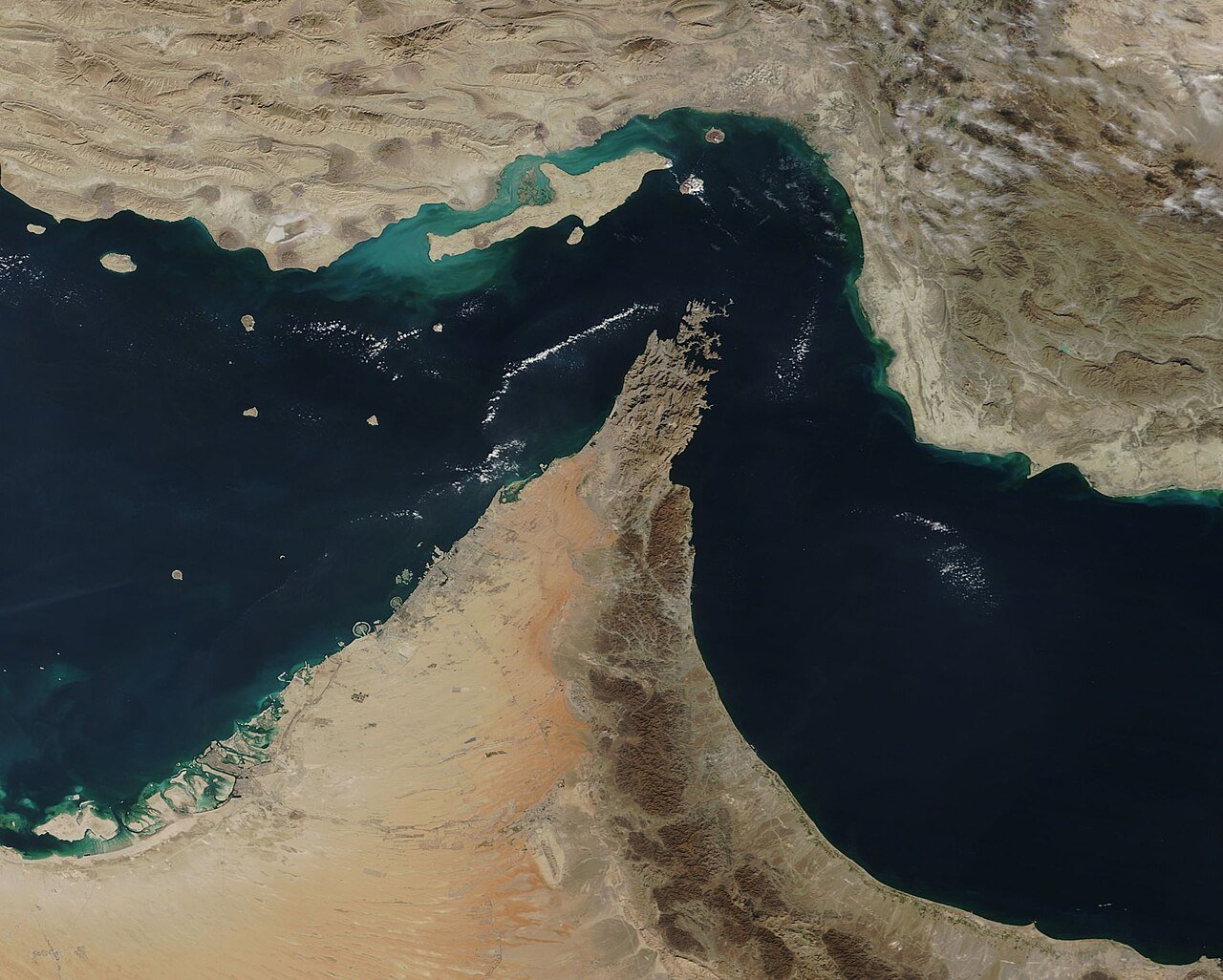
Twelve vessels were attacked near the Strait of Hormuz in the week of 5-11 October, BBC Verify analysis of UKMTO data shows, the highest weekly toll since the US-Israeli war with Iran began. Oil throughput fell to 12.6 million barrels per day on 13 October, down from a pre-war baseline of 17 million.
Twelve vessels were struck in and around the Strait of Hormuz in a single week, BBC Verify's analysis of UK Maritime Trade Operations data shows, the highest weekly toll recorded since the US-Israeli war with Iran began. The previous week saw ten ships reporting attacks. Six of those twelve were hit on Sunday 11 October, a one-day high. Since Monday a further four attacks have been reported.
Trade intelligence firm Kpler recorded roughly 12.6 million barrels of oil per day passing through the strait on 13 October, down from 15 million at the end of September and well below a pre-war baseline of around 17 million barrels per day. The Financial Times, cited by the Guardian, put the total number of ships hit in the two weeks to 11 October at 24.
US Central Command posted on social media that "commercial traffic continues to flow through the Strait of Hormuz with co-ordinated protection from US forces and regional partners." The numbers tell a different story. US Navy data show the number of vessels given assisted transit through the strait in the first ten days of October was up 85 percent compared with the same period in August.
Most Gulf Arab oil is now moving via a shuttle system: smaller tankers load up, hug Oman's coastline through the strait, then transfer cargo to larger tankers in the Gulf of Oman. Iran has declared that route "unauthorised" and insists ships pass closer to its own shore. Martin Kelly, chief executive of Orbital Risk Intelligence, told BBC Verify that Tehran has "evolved its strategy" and is carrying out "near daily or multiple attacks every single day." Kelly said the aim is "to stop the ships going through and to deter others."
Iran's Islamic Revolutionary Guard Corps has widened the kill zone. A tanker was hit by multiple projectiles north of Qatar on 8 October, more than 500 kilometres from the strait, according to maritime intelligence firm Vanguard. Another was attacked close to the UAE town of Al-Jazirah al-Hamra the following day. The IRGC's navy has announced a "new deployment formation" across the region, according to Iranian state media, and said strikes would not be "limited to the Strait of Hormuz."
The human cost is mounting. The Nicaragua-flagged tanker Petro Dolphin caught fire after a drone strike near Sohar Anchorage, Oman, more than 250 kilometres from the strait, on Sunday. Eleven Indian seafarers were rescued; two remain missing, the Forward Seamen's Union of India said. On Tuesday the container ship GFS Pride sank in the strait after being struck by an unknown projectile. Twenty-one crew were safely evacuated. The IRGC published footage of what appeared to be the same vessel going down, claiming it was carrying "2,500 containers of contraband" on an "unauthorised route."
An Iranian official told Reuters, reported by the Guardian, that the intensified campaign aims to "frustrate efforts by the United States and its allies to bring down global oil prices" before the US midterm elections on 3 November. US fuel prices have risen by almost 70 percent since the start of the war, the Guardian reported. Iran has turned a shipping lane into an election lever.
Every barrel of political pressure buys another week of empty tankers.

Sources
Published October 16, 2026 · Frisian News