€32 Million a Year: Spain Quadruples Union Subsidies as Membership Hits Record Low
October 20, 2026 · Frisian News
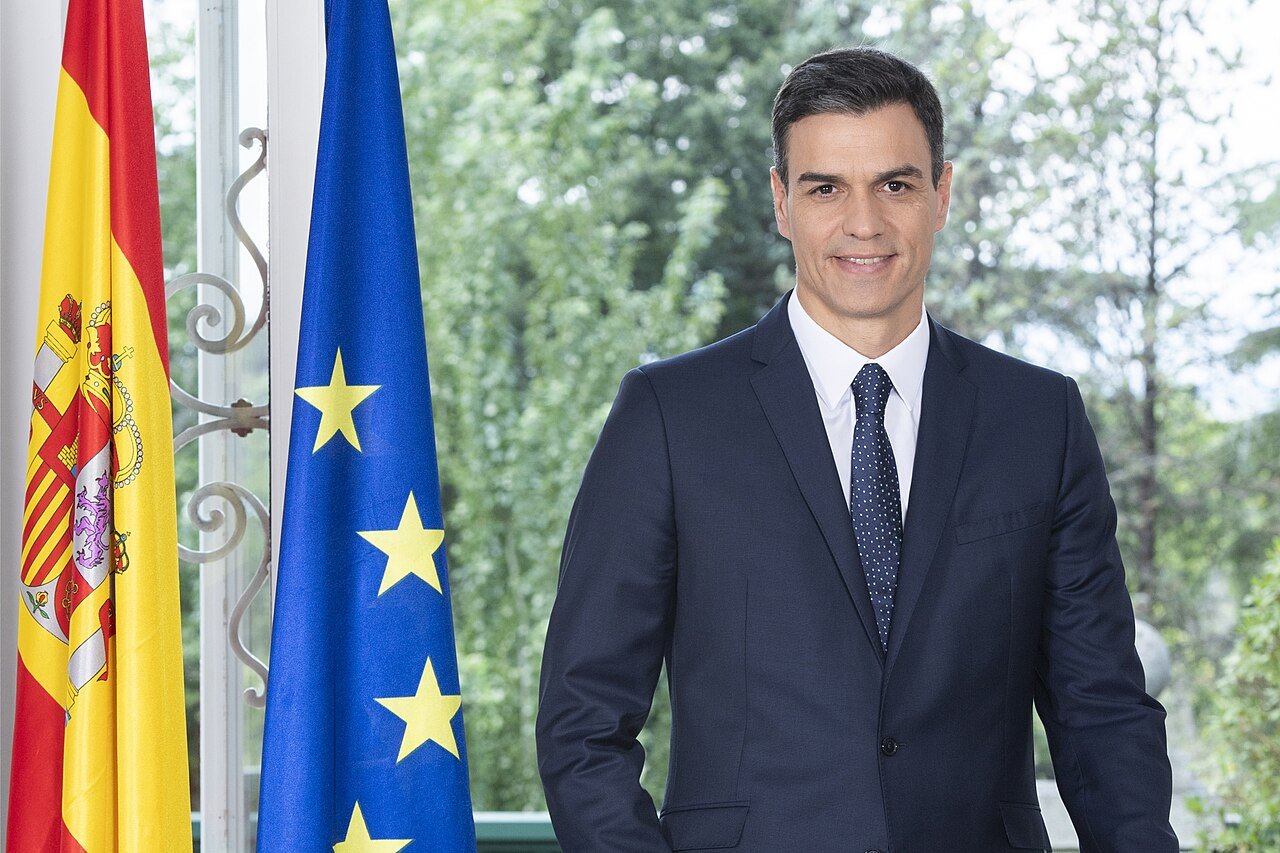
Photo: Wikimedia Commons
Direct state subsidies to Spain's two largest unions rose from €8.8 million a year under Mariano Rajoy to €32 million under Pedro Sánchez, while union membership fell to 12.5 per cent of workers, its lowest recorded level.
Direct state subsidies to Spain's two largest union federations have nearly quadrupled under Prime Minister Pedro Sánchez, rising from €8.8 million a year under his predecessor Mariano Rajoy to €32 million for 2025 and 2026, according to Finance Ministry data reported by the Spanish daily ABC. Over the same period, union membership has fallen to its lowest level in decades.
The General Workers' Union (UGT) and Workers' Commissions (CCOO) collected a combined €110 million in direct central-government grants between 2018 and 2025, more than double the €48 million they received during the entire Rajoy period, according to figures compiled by El Español. Total public money flowing to both federations, including regional branches and linked foundations, exceeded €569 million across that eight-year stretch, according to an analysis of Treasury beneficiary lists reported by El Diario de Madrid.
OECD data cited by ABC show union density in Spain fell to 12.5 per cent of salaried employees in 2023, down from 16.7 per cent in 2012. That places Spain well below the EU average and far behind Italy, where 30 per cent of workers hold union membership, and Sweden, where the figure stands at 62.3 per cent.
The Ministry of Labour is run by Yolanda Díaz, who worked for CCOO as a labour lawyer before entering politics. Her late father, Suso Díaz, served as the union's secretary-general in Galicia, according to El Español. The first significant subsidy rise came in 2021, the year after she took the ministry, when the annual allocation jumped from €8.8 million to €13.88 million. It rose to €17 million for 2022 through 2024, then nearly doubled to €32 million for 2025, a figure carried forward to 2026, according to El Diario de Madrid.
On top of direct grants, UGT and CCOO occupy 58 state-owned buildings free of charge under a 1986 law, with the portfolio covering more than 22,800 square metres and carrying an estimated market value exceeding €200 million, according to Brussels Signal. The state pays the associated property taxes, amounting to at least €700,000 a year, and covers capital expenditure. In 2021, the Ministry of Labour directed €100 million in European recovery funds toward energy-efficiency renovations at 42 union headquarters.
CCOO general secretary Unai Sordo told Spanish radio station COPE on October 6 that public money received by his federation "represent less than 10 per cent of the budget of CCOO." CCOO's own 2023 accounts show that official subsidies totalled €7.8 million, equal to 35 per cent of the federation's €21.7 million in total income, according to El Español. UGT's last published accounts, from 2021, record €10.5 million in programme income from subsidies, representing 43 per cent of the federation's €24.7 million revenue that year.
Despite representing one in eight workers, the two federations sign agreements the law then extends across entire sectors, giving Spain collective bargaining coverage of close to 80 per cent of employees, among the highest in the OECD, according to Brussels Signal. Neither federation called a general strike in the 14 years between November 2012 and this year. Under Rajoy they called one barely three months after he took office and a second on November 14 that year. Now, with elections set for November 29, they have announced a 24-hour stoppage for November 11, two days before campaigning opens, joining a call originally launched by smaller tenant and labour organisations.
María Jesús Montero, former Finance Minister and current head of strategy for the Sánchez campaign, stated the dynamic plainly, according to El Español: "Strikes are usually called against governments. In this case it is called against the opposition."

Published October 20, 2026 · Frisian News