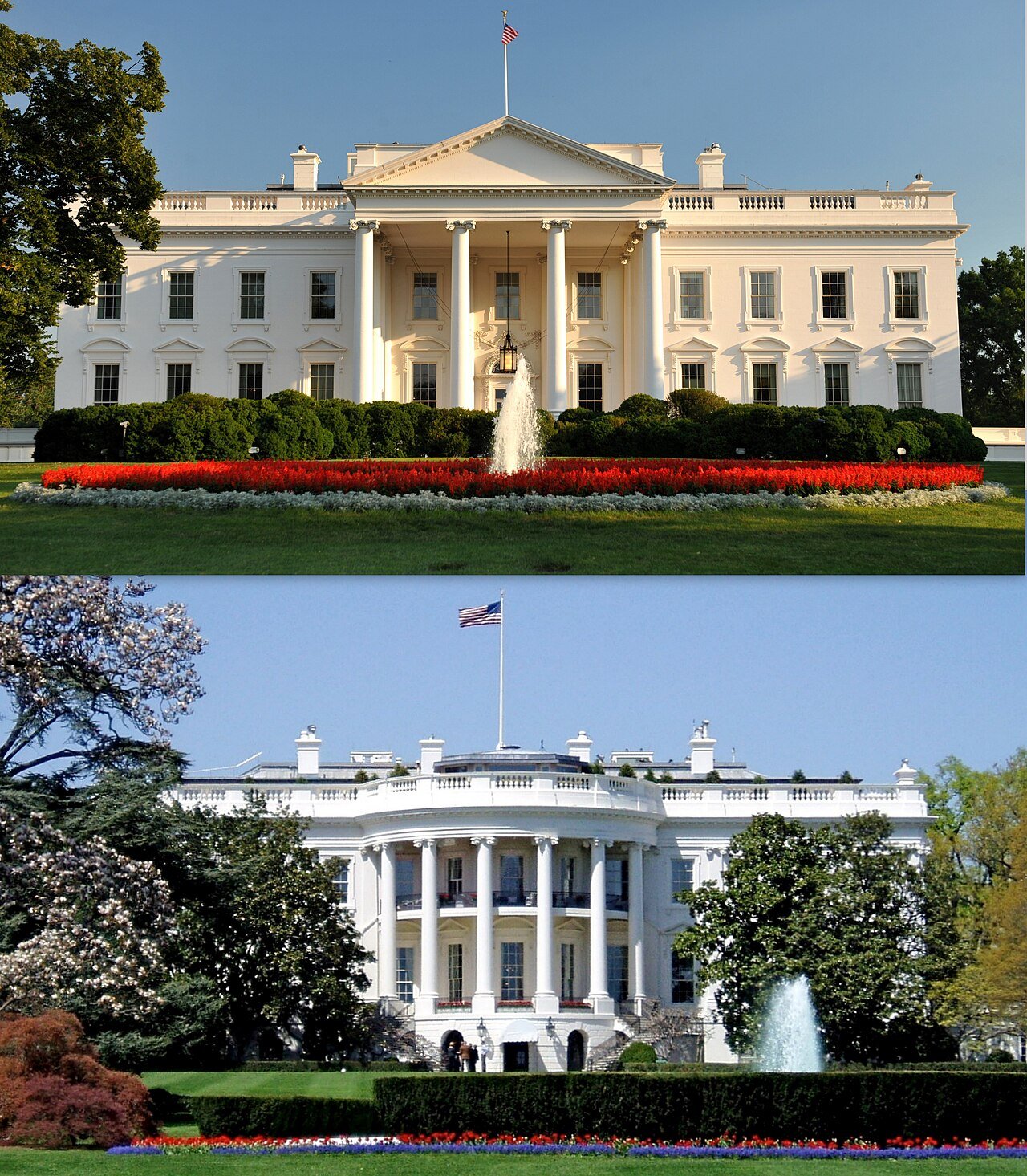
8.2 Percent: What the White House Tax Study Actually Measured
November 7, 2026 · Frisian News
Photo: Wikimedia Commons
The Biden White House published a 2021 study claiming America's 400 wealthiest families paid just 8.2 percent in federal income tax. The number is valid under its own assumptions, but those assumptions count unsold stock gains as income and exclude corporate tax entirely.
8.2 percent. That is the headline figure the White House published on 23 September 2021, claiming it showed the average federal individual income tax rate paid by America's 400 wealthiest families between 2010 and 2018.
The paper was written by Greg Leiserson, Senior Economist at the Council of Economic Advisers, and Danny Yagan, Chief Economist at the Office of Management and Budget. The White House released it the same week President Biden was pressing Congress to pass his Build Back Better spending package, funded in part by raising capital gains taxes. The paper closes by promoting the 2022 President's Budget proposal to raise capital gains rates and end stepped-up basis. The number served a sales pitch.
The study itself explains the gap in its own body text. "Our primary estimate of 8.2 percent is much lower than commonly cited estimates of top Federal individual income tax rates," the authors write. The Joint Committee on Taxation estimated in 2021 that the top 0.4 percent of families ranked by income, the 715,000 families earning over $1 million, paid a 26 percent federal individual income tax rate. The difference between 8.2 and 26 is not an error. It is a definition.
The authors write that they "include untaxed ('unrealized') capital gains income in our more comprehensive income measure as they accrue." In plain terms: if a billionaire's shares rise in value but they sell nothing, the paper counts that price rise as income. The denominator grows, and the effective rate falls sharply. The authors acknowledge this matters "greatly for the wealthiest families for whom such unrealized and thus untaxed gains are a large share of their income" but "relatively little for estimating most families' tax rates," since roughly half of all Americans own no stock at all.
The nine-year window runs from 2010 to 2018. The authors present sensitivity estimates ranging from 6 to 12 percent depending on methodological choices, and they note that the true rate under a fully comprehensive income definition would likely be lower still, since their measure also excludes consumption.
The study also covers only federal individual income tax. The authors note that "alternative tax rates could also be estimated that account for other taxes, such as the payroll tax, estate and gift tax, corporate income tax." Those taxes do not appear in the 8.2 percent figure. Nor does the state and local tax these families pay.
One point in the paper is genuine and stands without the unrealized-gains framing. Stepped-up basis is real: when a wealthy investor holds appreciated assets until death, those gains are reset for heirs and escape income tax entirely. The authors are correct to identify that as a structural feature of the tax code. That argument does not need a novel definition of income to hold.
The 8.2 percent is a valid result under its own assumptions. What it is not is the rate at which tax authorities actually collect money from the wealthy each year. It is the rate produced when paper gains on unsold assets count as income and only federal individual income tax appears in the numerator. The economists who wrote it said exactly that in the body of the paper. The press release headline did not.
A number that depends entirely on its definition of income is a policy argument wearing arithmetic.

Published November 7, 2026 · Frisian News