NASA Detects El Niño Warning: What the Warm Water Signal Really Means
June 13, 2026 · Frisian News
NASA satellites have detected warm water moving toward South America, signaling that El Niño is likely returning. But the forecast comes with caveats: past predictions have failed, and a warming signal is not the same as certainty.
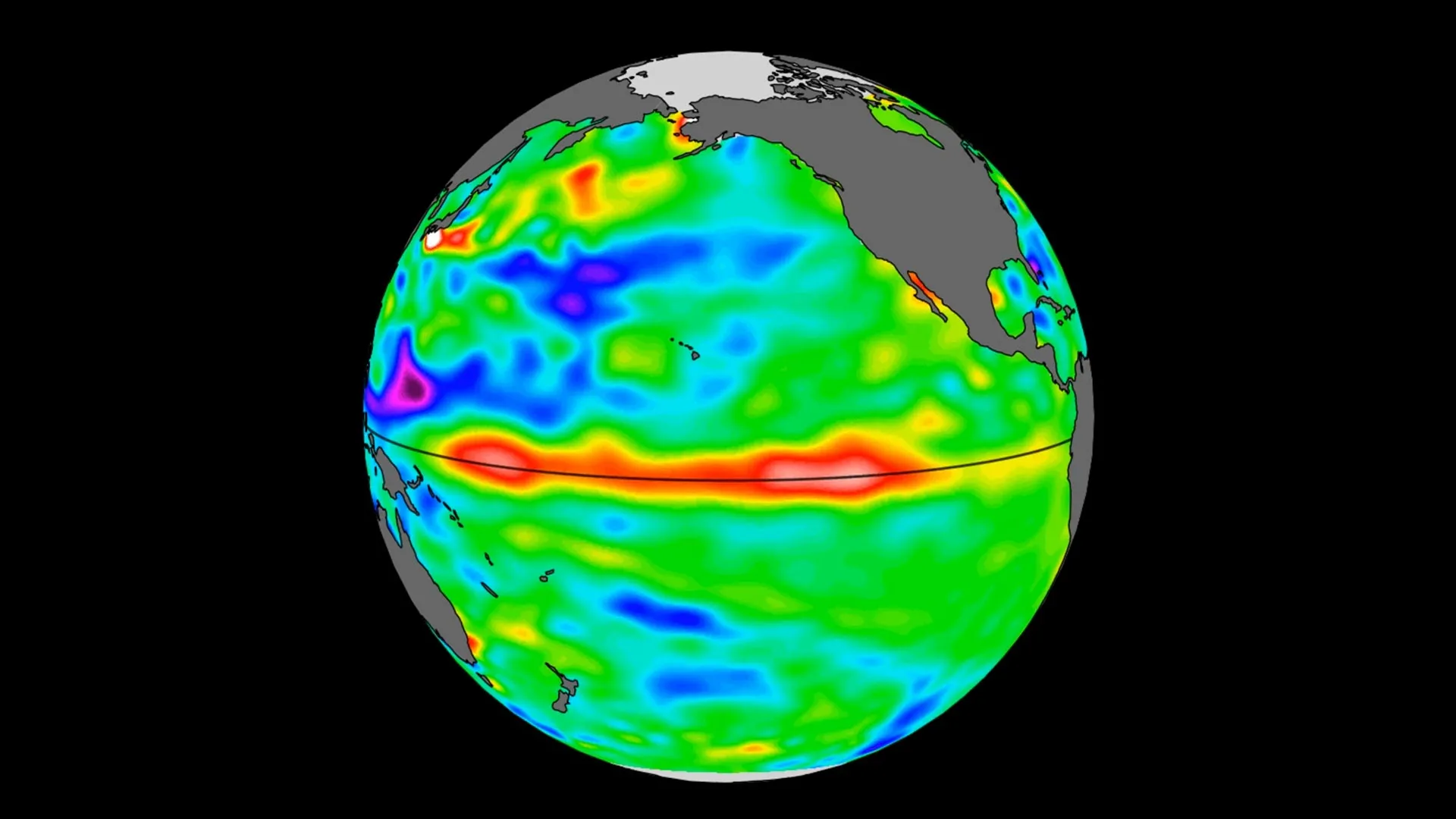
NASA's satellites have tracked a massive pulse of warm ocean water moving across the Pacific toward South America. Enormous waves called Kelvin waves drive this underwater current and carry heat that can reshape weather patterns around the world. The detection signals that El Niño, the cyclical climate pattern that emerges roughly every three to five years, is likely returning.
El Niño works through a simple mechanism: warm water in the western Pacific pushes eastward, weakening the trade winds that normally keep it contained. As this warm mass reaches the Americas, it shifts atmospheric pressure patterns, jet streams, and rainfall across the globe. The result is dramatic but not random. Floods hit some regions, droughts strike others, and global temperatures spike for months or years.
NASA's detection matters, but the word "likely" deserves scrutiny. Forecasts of El Niño have failed before. Climate agencies predicted a strong episode in the past that never fully materialized. The Kelvin waves are a real signal, but they do not guarantee a complete El Niño event. Ocean conditions can shift. What NASA is showing is the necessary precondition, not certainty of what comes next.
The real question is timing and strength. A weak El Niño causes crop stress in Africa and parts of South America but leaves other regions relatively untouched. A strong one can trigger humanitarian crises. Fishing communities in Peru and Ecuador, already fragile after climate shocks, face potential hardship. Australia might see drought. Meanwhile, parts of the U.S. and southern Africa could see heavier rainfall. These outcomes have economic weight, not just meteorological interest.
NASA's early warning gives governments months to prepare, if they choose to act. The real test is whether they will.
 Frysk
FryskDe sateliten fan NASA hawwe in gigantyske massa waarm oseaanwetter folge dy't him oer de Stille Oseaan nei Súd-Amearika beweecht. Gigantyske weagen, Kelvinweagen neamd, driuwe dizze ûnderwetterstroom oan en fiere waarmte mei dy't waarspatroanen wrâldwiid feroarje kinne. De deteksje toant oan dat El Niño, it syklyske klimaatpatroan dat sa'n alle trije oant fiif jier opdûkt, wierskynlik opnij oankomt.
El Niño wurket fia in ienfâldich meganisme: waarm wetter yn de westlike Stille Oseaan triuwt nei it easten en ferswakket de pasaatwinen dy't it gewoanwei beheind hâlde. As dizze waarmtemassa Amearika berikt, ferpleatst it de atmosferyske druk, jetstreamen en rein oer de hiele wrâld. It resultaat is dramatysk mar net willekeurich. Oerstreamingen treffe guon gebieten, drûchten treffe oaren, en wrâldwide temperatueren stege yn de rin fan moannen of jierren.
De deteksje fan NASA is wichtich, mar it wurd 'wierskynlik' fertsjinnet omtinken. Foarsizzingen fan El Niño binne earder mislearre. Klimaataginturen hawwe earder in sterke episode foarsei dy't nea folslein ta bloei kaam. De Kelvinweagen binne in werklik sinjaal, mar garantearje gjin kompleet El Niño-barren. De omstannicheden yn de oseaan kinne ferskowe. Wat NASA oantsjut is de needsaaklike foarwearde, net wissichheid fan wat folget.
De echte fraach is timing en krêft. In swak El Niño feroarsaket skea oan de teelt yn Afrika en dielen fan Súd-Amearika, wylst oare regio's relatyf ûnbeskeadige bliuwe. In sterke episode kin humanitêre krizen feroarsaakje. Fiskersgemeenskippen yn Perû en Ecuador, al kwetsber nei eardere klimaatskokken, riskearje earnstige swierrichheden. Australje kin mei drûchte konfrontearre wurde. Underwilens kinne dielen fan de FS en súdlik Afrika swierder rein ûnderfine. Dizze gefolgen hawwe ekonomysk gewicht, net allinnich meteorologysk belang.
De iere warskôging fan NASA jout regearingen moannen om harren foar te bereiden, mits hja dit dwaan wolle. De echte test is oft hja hannelje.
Published June 13, 2026 · Frisian News