70% of Ceuta Asylum Claims Now Cite Sexual Orientation, Police Sources Say
October 19, 2026 · Frisian News
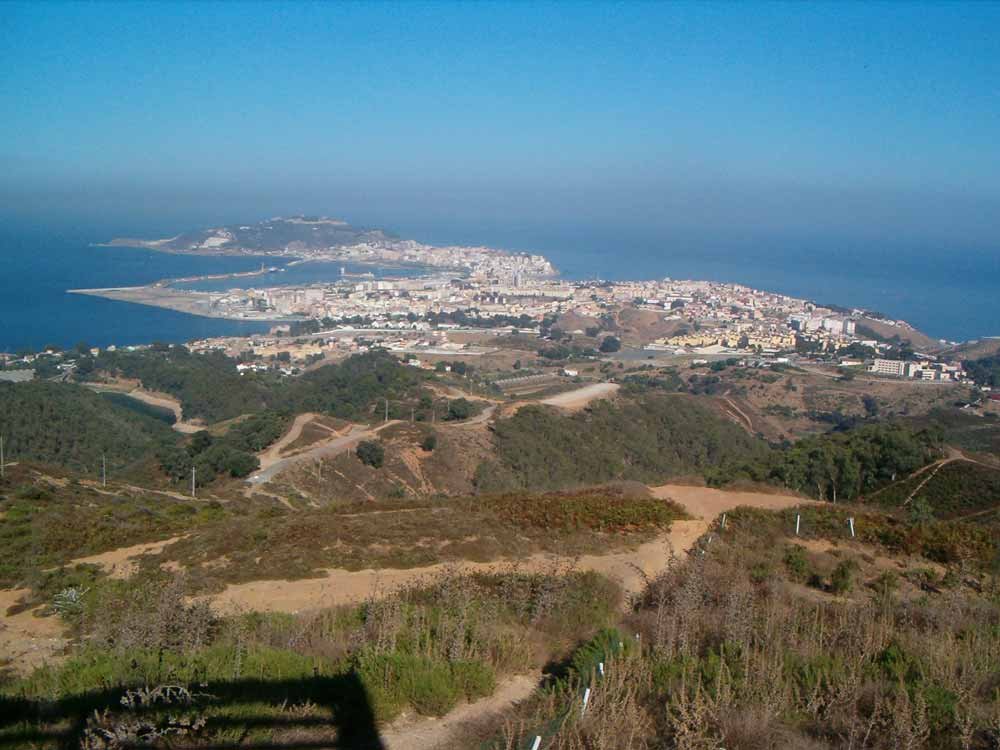
Photo: Wikimedia Commons
Seventy per cent of recent asylum applications in Spain's North African enclave of Ceuta cite sexual orientation as the grounds for persecution, according to police sources cited by the Spanish daily ABC. Spanish police suspect systematic coaching of applicants to exploit a protected legal ground.
Seventy per cent of asylum applications recently filed in Spain's North African enclave of Ceuta cite persecution on grounds of sexual orientation, according to police sources cited by the Spanish daily ABC and reported by Apollo News. The figure comes from police circles, not official statistics. No government department has published a breakdown.
The number did not begin there. After the mass crossings of late July 2026, in which the Spanish government later confirmed roughly 72,000 people entered the enclave within two days, early applications listed economic motives. Applicants pointed to unemployment in their home countries and the prospect of better conditions in Spain. Over the following weeks, the dominant stated reason shifted.
Police sources cited by ABC suspect systematic coaching behind that change. Applicants may have received guidance on which stated grounds improve their protection prospects. No documentary evidence of an organised coaching operation has been published.
Raúl Piera, the representative of the Spanish police union SUP in Ceuta, told the local paper El Pueblo de Ceuta that roughly two-thirds of applicants were already citing sexual orientation three weeks after the July crossings. His current estimate, which refers to a later point in time than the 70 per cent ABC figure, is that the share has now reached 90 per cent.
The claim of sexual-orientation persecution is not implausible on its face. Police-circle estimates cited by ABC put roughly 95 per cent of the applications as filed by Moroccan nationals, and Morocco criminalises same-sex acts with penalties of up to three years in prison. That legal reality gives the stated ground surface plausibility. The statistical problem is a share of 70 to 90 per cent.
Interior Minister Fernando Grande-Marlaska said nearly 1,200 asylum applications were filed in Ceuta since the border crossings. El Nacional reported that approximately 10,000 predominantly Moroccan migrants remained in the enclave as of mid-October.
The late-July surge itself set records the enclave had never approached. A Supreme Court ruling published on 8 July 2026 restricted expedited summary returns for maritime arrivals in Ceuta and Melilla, and Spanish officials say word spread on Moroccan social media and encouraged people to cross. The European Parliament Research Service, in a briefing last updated 8 October 2026, puts the total who entered on 30 July at an estimated 80,000, with at least 141 deaths. By 2 August, most had returned to Morocco.
A legal ground that accounts for 70 per cent of claims in a population that is 95 per cent Moroccan is a data pattern, not a demographic coincidence.

Published October 19, 2026 · Frisian News