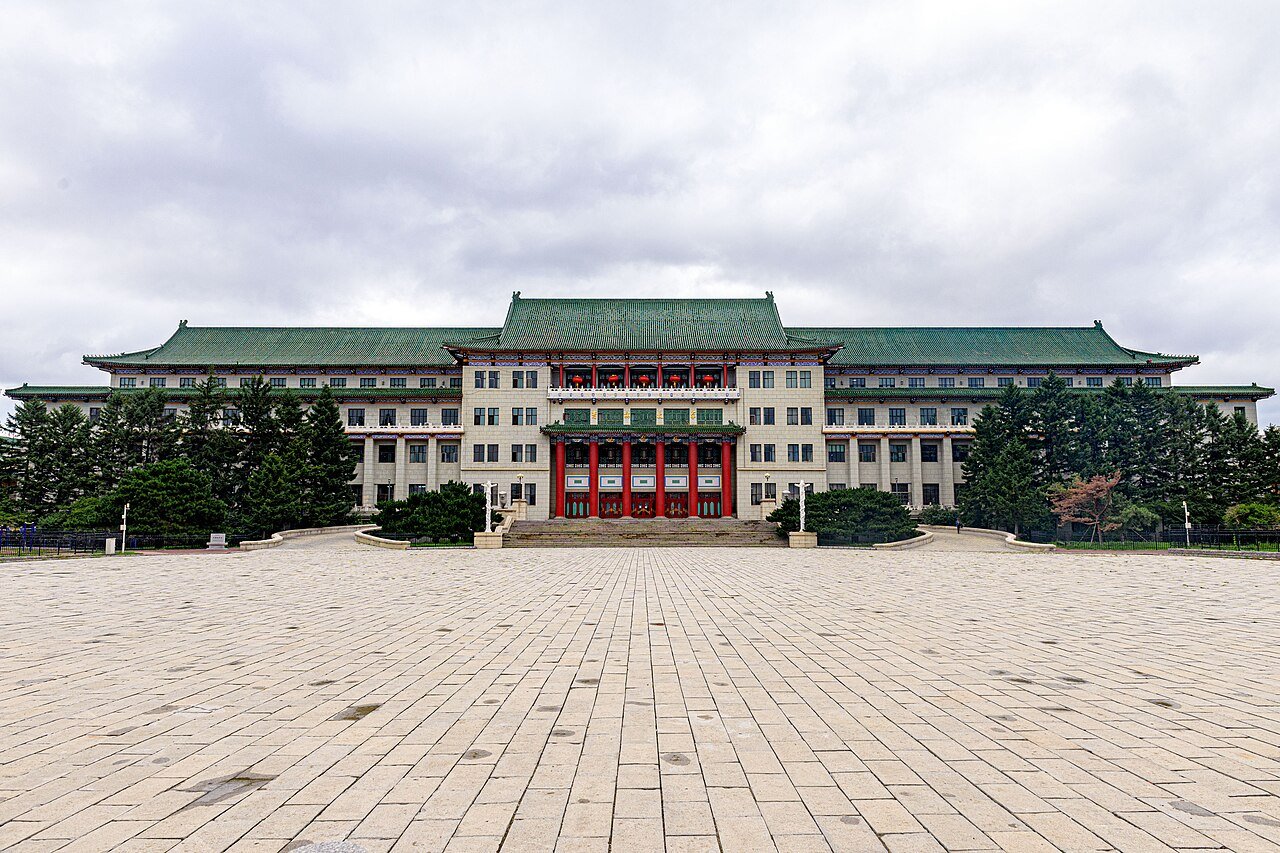
€500 Million Loss Looms at Audi's China EV Ghost Factory
November 25, 2026 · Frisian News
Photo: Wikimedia Commons
Audi's Changchun electric-vehicle plant is projected to lose roughly €500 million in 2026 while running at under 10% of its 150,000-unit annual capacity, with production taking place on just two to three days a month.
Audi's joint-venture electric vehicle plant in Changchun, China, is projected to lose roughly €500 million in 2026, according to company sources cited by German business daily Handelsblatt on November 23. The facility cost more than €2.5 billion to build and was designed to produce over 150,000 vehicles a year. It is instead on course to deliver fewer than 10,000.
That gap between design and reality translates directly into money burned. Audi holds a 55 per cent majority stake in the venture, with Chinese state-owned FAW Group at 40 per cent and Volkswagen at 5 per cent. Because Audi controls the majority, its losses weigh heavily on the German brand and on parent company Volkswagen Group.
Staff and industry observers now call the Changchun site "Audi's ghost factory." Production reportedly runs on just two to three days a month. The plant, which began serial production on December 17, 2024, manufactures only battery-electric models for the Chinese market: long-wheelbase versions of the Q6 e-tron and the A6 e-tron, sold locally as the Q6L and A6L. In October, automotive platform Yiche, as cited by chinaevhome.com, recorded sales of 448 Q6 e-tron units and 96 A6 e-tron units across the market. At those volumes, the factory's annual capacity of 150,000 is not a target. It is a rebuke.
Audi declined to confirm the financial figures. In a statement to Reuters, the company said: "The segment has developed more slowly than was anticipated a few years ago. This has also had an impact on the production volumes of our premium electric models, which we manufacture locally at our Changchun facility." The company added that production schedules had been adjusted. The assembly lines are largely idle.
The figures do not support the optimism that underpinned the investment. Audi's overall vehicle deliveries in China fell 24.5 per cent in the first nine months of 2026 to 328,042 units. Battery-electric deliveries grew 84.7 per cent year on year to 24,203 vehicles, according to Audi. That growth sounds large until one notes that it represents only about 7.4 per cent of the brand's total China sales, and that the absolute numbers remain far too small to fill a factory built for ten times that output.
Audi's China-related financial result for the first nine months of 2026 came to €38 million, down 90.2 per cent from €386 million in the same period of 2025, according to chinaevhome.com. Group revenue for the same nine months fell 13.1 per cent to €42.06 billion. Operating profit dropped 26 per cent to €1.15 billion. In the third quarter alone, operating profit collapsed to €29 million from €468 million a year earlier. Chief financial officer Jürgen Rittersberger, as reported by brusselssignal.eu, said "the need for action at Audi is high and brooks no delay."
The Changchun situation has fuelled criticism of Audi chief executive Gernot Döllner, according to Die Welt as cited by brusselssignal.eu. Critics inside Volkswagen Group have questioned why Döllner is exploring additional manufacturing capacity in the United States when existing factories stand largely idle. Volkswagen Group itself reported an operating loss of €5.9 billion in the third quarter of 2026, as reported by brusselssignal.eu, its steepest quarterly loss in more than a decade.
Audi spent €2.5 billion proving that factories cannot manufacture demand.

Published November 25, 2026 · Frisian News