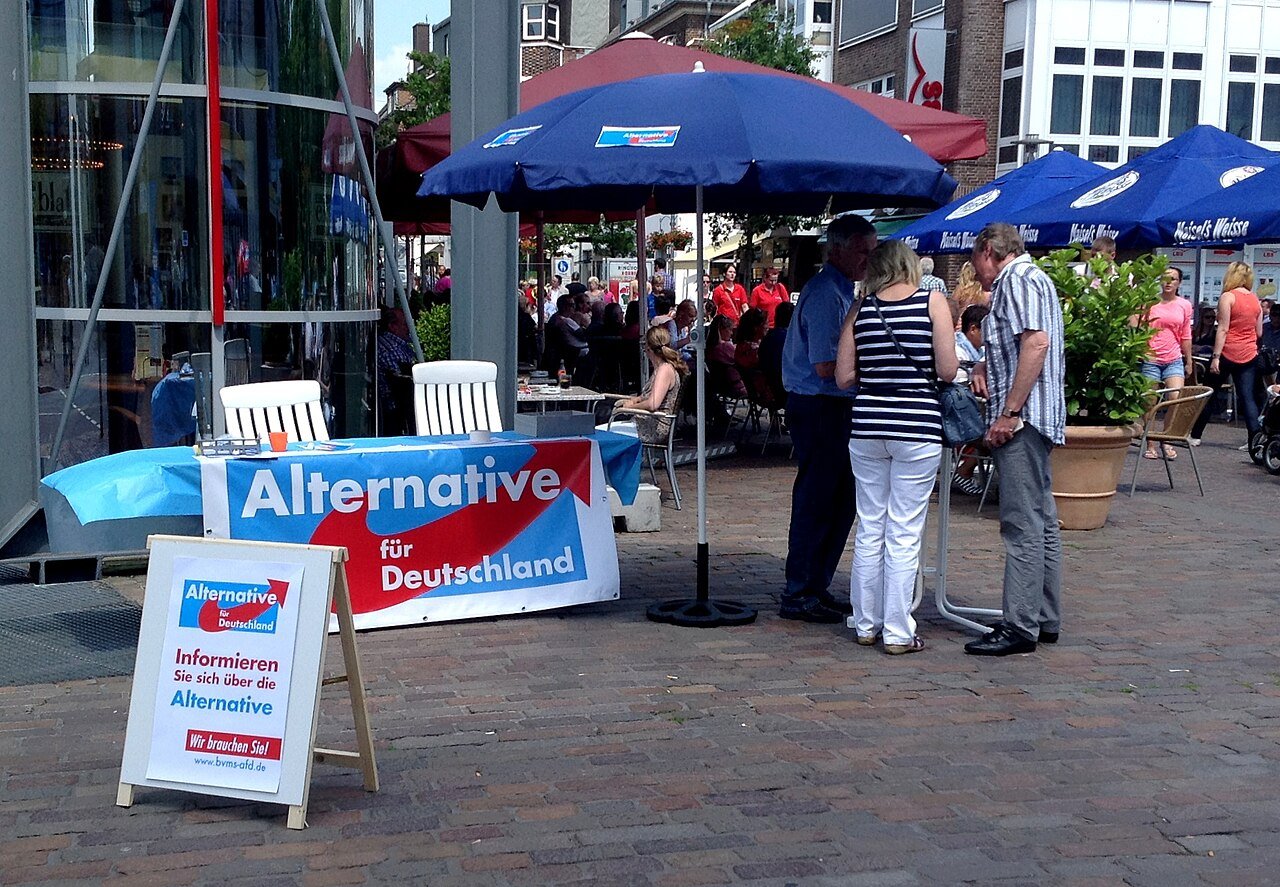
421,000 AfD Emails Leaked After Hack on Party's Hosting Provider
October 21, 2026 · Frisian News
Photo: Wikimedia Commons
Hackers stole 421,179 internal emails and 281 gigabytes of data from Alternative for Germany after breaching a third-party hosting provider in September 2026. No German government body has commented publicly, and an anonymous party offered €100,000 to silence the leak site.
421,179 internal emails from Alternative for Germany politicians and offices appeared online on October 19, 2026, after hackers breached an external IT hosting provider and copied roughly 281 gigabytes of data from approximately ten party inboxes, according to reporting by Brussels Signal and the German newspaper Bild.
The AfD confirmed the attack. "In September 2026, there was a hacking attack on a hosting provider used by our party," a party spokesperson told Bild, adding the breach was quickly detected and stopped and that current accounts belonging to the federal executive board were not affected. Most targeted addresses, the party said, had not been used for years.
That claim does not fit the dates on the archive. Brussels Signal reported the material runs from 2014 through to September 2026, and Cybernews found the oldest entry dates to 2013. Brussels Signal noted that the date range sits awkwardly with the party's account of dormant mailboxes.
The named inboxes belong to some of the party's most recognizable figures. According to information accompanying the leaked repository, the material includes an account under the name of former co-leader and honorary chairman Alexander Gauland. German outlets reporting on the archive also listed accounts in the names of co-leader Alice Weidel, deputy leader Beatrix von Storch, former co-leader Jörg Meuthen, and Bundestag member Leif-Erik Holm. Bild said it viewed a portion of the material and found identity documents, including the identity card of deputy parliamentary group chairman Markus Frohnmaier, as well as bank statements, invoices, membership applications, and membership lists from AfD district associations in North Rhine-Westphalia.
The website distributing the files was registered only in mid-October, the German news agency dpa reported as cited by Yahoo News, and Brussels Signal noted it appears AI-generated, as do partially translated files. Visitors receive a phishing warning on arrival. The site's operators claim an automated review of roughly 39,000 messages rated 611 as "critical" and a further 10,450 as pointing to serious misconduct. Those ratings have not been independently verified, and Brussels Signal reported that no spectacular scandals emerged on the first day of reporting.
German security researcher Lilith Wittmann said on X, as reported by Brussels Signal, that she considered the material genuine on the basis of what she had seen, and that the access method was traceable. The hacker told International Cyber Digest, as cited by Cybernews, that the operation started with a single unpatched AfD website and that the goal was to expose what they called the party's "degeneracy and hypocrisy." An anonymous user subsequently contacted the hacker via Proton Mail, offering €100,000 to take the leak site offline, Cybernews reported. The hacker refused.
No one has claimed responsibility by name. The breach is the second targeting the party in recent weeks: on September 3, unidentified individuals hijacked the Thuringia AfD parliamentary group's press spokesman account, that of Hans-Jörg Jenewein, and sent phishing emails from it, Brussels Signal reported.

Published October 21, 2026 · Frisian News